E-vortex
Ferrari
Italy
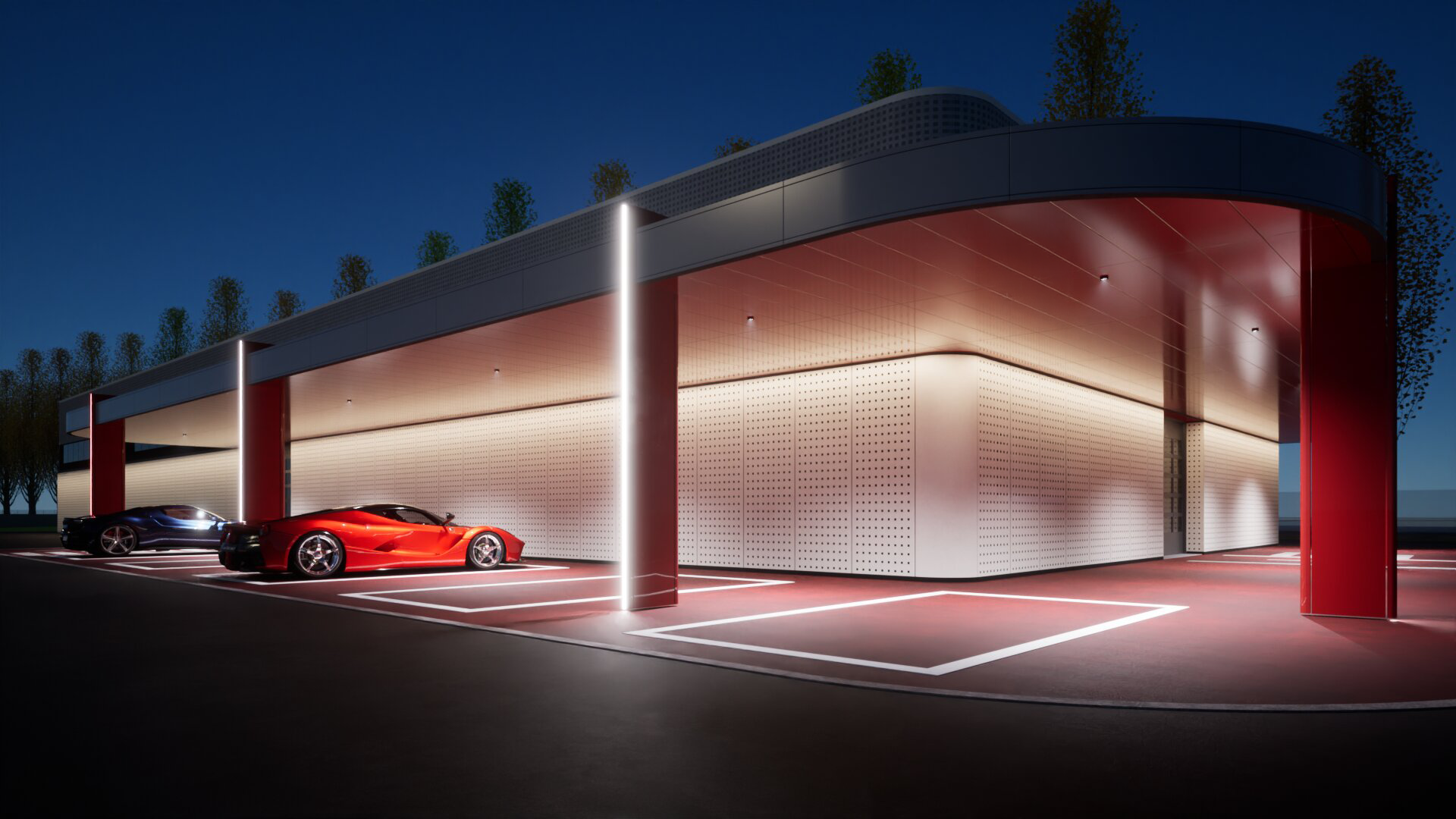
The Ferrari e-Vortex test track was developed as a strategic expansion of the Maranello-based manufacturer’s production and testing ecosystem, situated alongside the historic Fiorano Circuit. The project addresses the need to transition "end-of-line" testing for series-production vehicles from public roads to a dedicated, controlled environment. The intervention combines safety requirements, increased productivity, and maximum process reliability, translating Ferrari's continuous pursuit of performance into a permanent infrastructure.
Client
Ferrari S.p.A.
Typology
Industrial Infrastructure | Test & Inspection Track
Location
Fiorano Modenese, Modena, Italy
Services
Architectural and integrated design, urban planning variants, track design, design coordination.
Year
2025
Technical Data
Site Area: approx. 113,870 sqm
Track Length: nearly 2 km
Team
Luca Bernardoni, Grazia Barbieri
Credits
Architectural Design: Archilinea S.r.l.
Structural Design: Eng. Luca Capellari
Track Design: Studio Dromo S.r.l.
Electrical System: Eng. Paolo Scudieri
Mechanical and Fire Protection Systems: Eng. Luca Buzzoni
Geological Consulting: Geol. Ildo Facchini
Acustic Consulting: Dott. Carlo Odorici
Construction Site Management: Eng. Arch. Luca Bernardoni
CONCEPT
The concept of the Ferrari e-Vortex is rooted in the idea of a highly specialized technical track, designed as a functional tool for engineering and product quality. The layout is conceived as a calibrated sequence of dynamic scenarios, capable of replicating real-world driving conditions through banked curves, variable radii, straights, and surfaces with diverse grip characteristics.
Rather than an iconic or spectacular element, the track is a functional infrastructure integrated into the existing industrial landscape and in dialogue with the historic Fiorano Track. The design interprets Ferrari’s core values—precision, control, and performance—into rigorous geometries, advanced technical solutions, and an optimized spatial layout that ensures test repeatability and maximum operational safety.
PROJECT
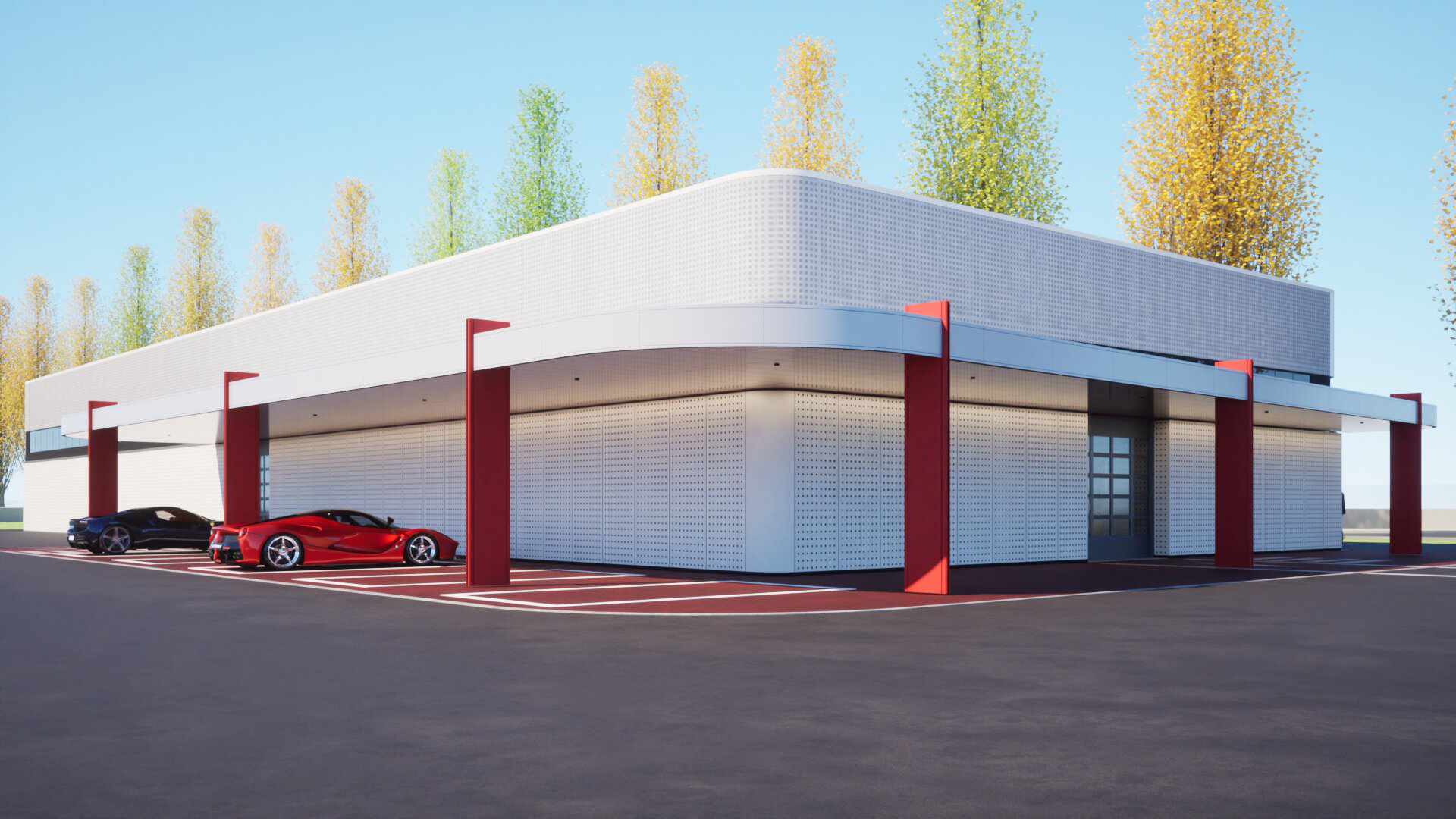
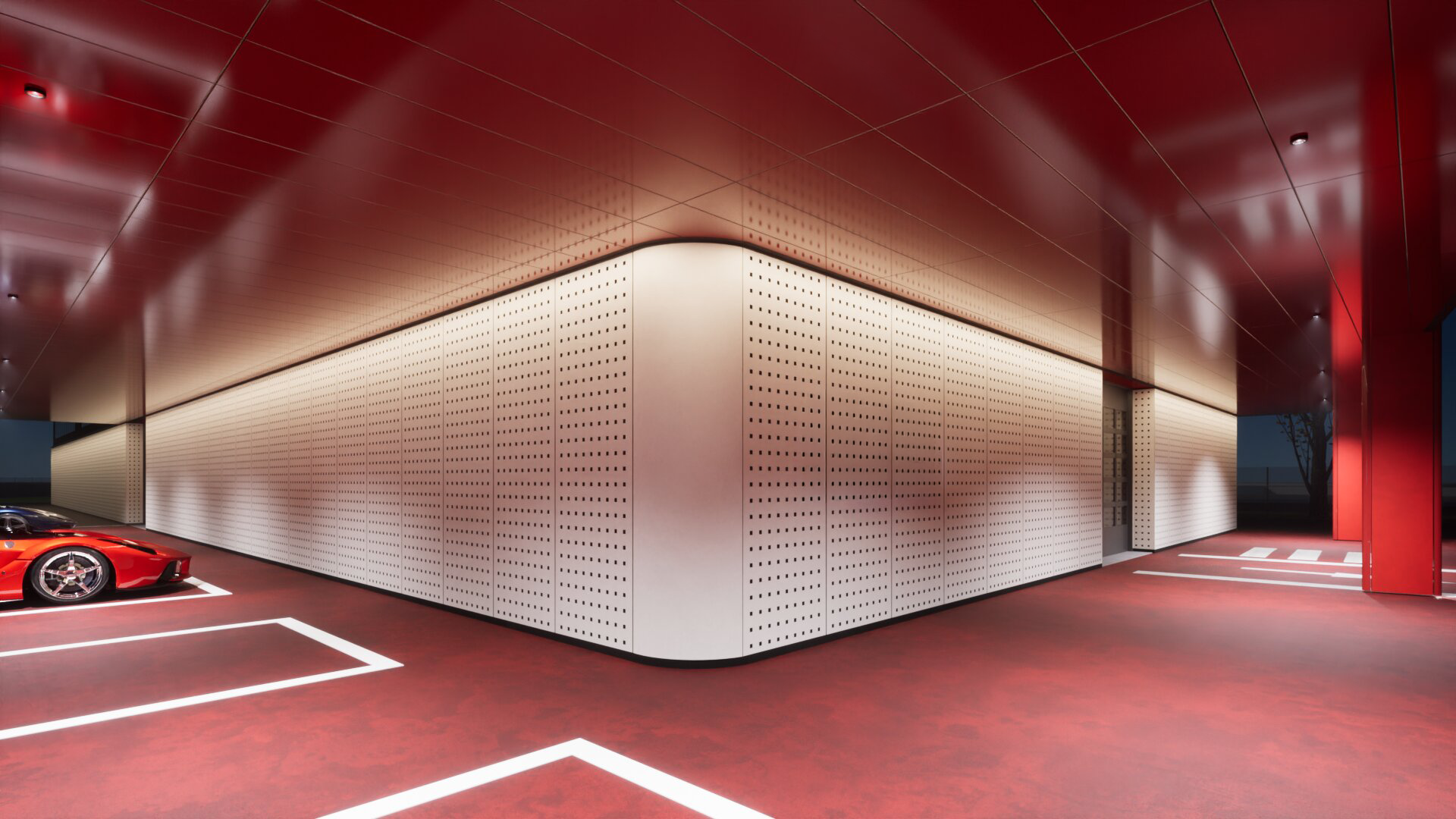
The project features a new test track dedicated to the final inspection of production vehicles, spanning an area of approximately 114,000 sqm. The nearly 2-km circuit integrates banked curves, straights, and specialized surfaces for differentiated dynamic tests. The intervention also includes boundary adjustments with the Fiorano circuit and advanced safety systems, ensuring intensive and controlled use of the infrastructure.
CONSTRUCTION SITE
The Ferrari e-Vortex was completed within an extremely tight timeframe, with the entire worksite finished in approximately four months. This rapid execution was made possible by precise design coordination and integrated site management, ensuring constructive accuracy, high-quality surfaces, and compliance with the strict tolerances required for a high-performance test track.
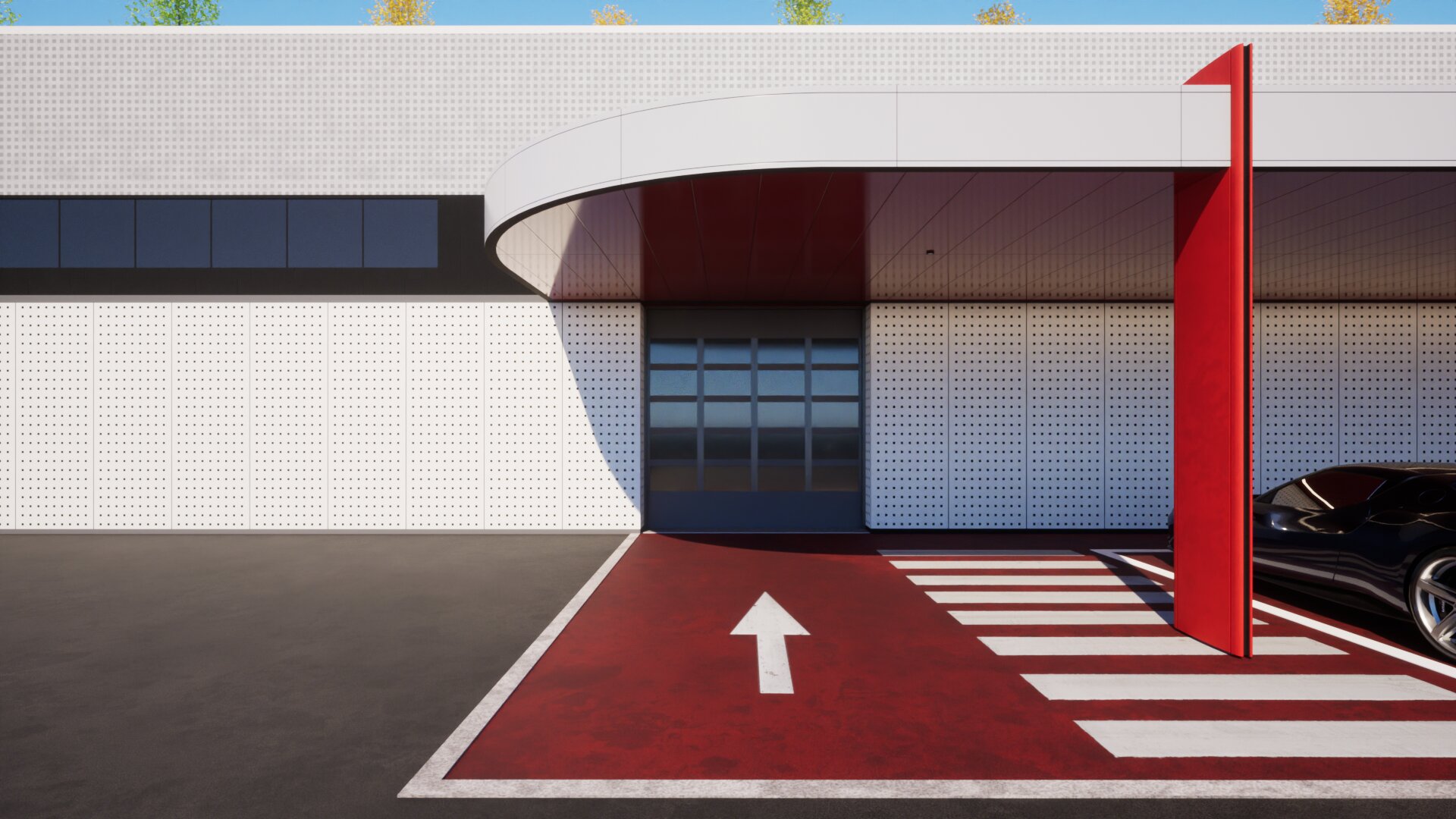
The e-Vortex track is dedicated to “end-of-line” testing—the functional and dynamic verification of vehicles prior to client delivery. The project resulted from an in-depth analysis of existing testing protocols, conducted in collaboration with the Ferrari Road Test Department, in a circuit capable of hosting a higher volume of vehicles under superior safety conditions if compared to public roads.
The track configuration was defined based on vehicle performance, required speeds, and specific test types, incorporating substantial safety margins. Attention was paid to run-off areas, protection devices, and the redesign of shared boundaries with the Fiorano track, simultaneously improving overall site safety.
This new infrastructure allows Ferrari to optimize the testing process, increasing productivity, control, and reliability, while strengthening the brand’s R&D capabilities within a dedicated and highly specialized context.
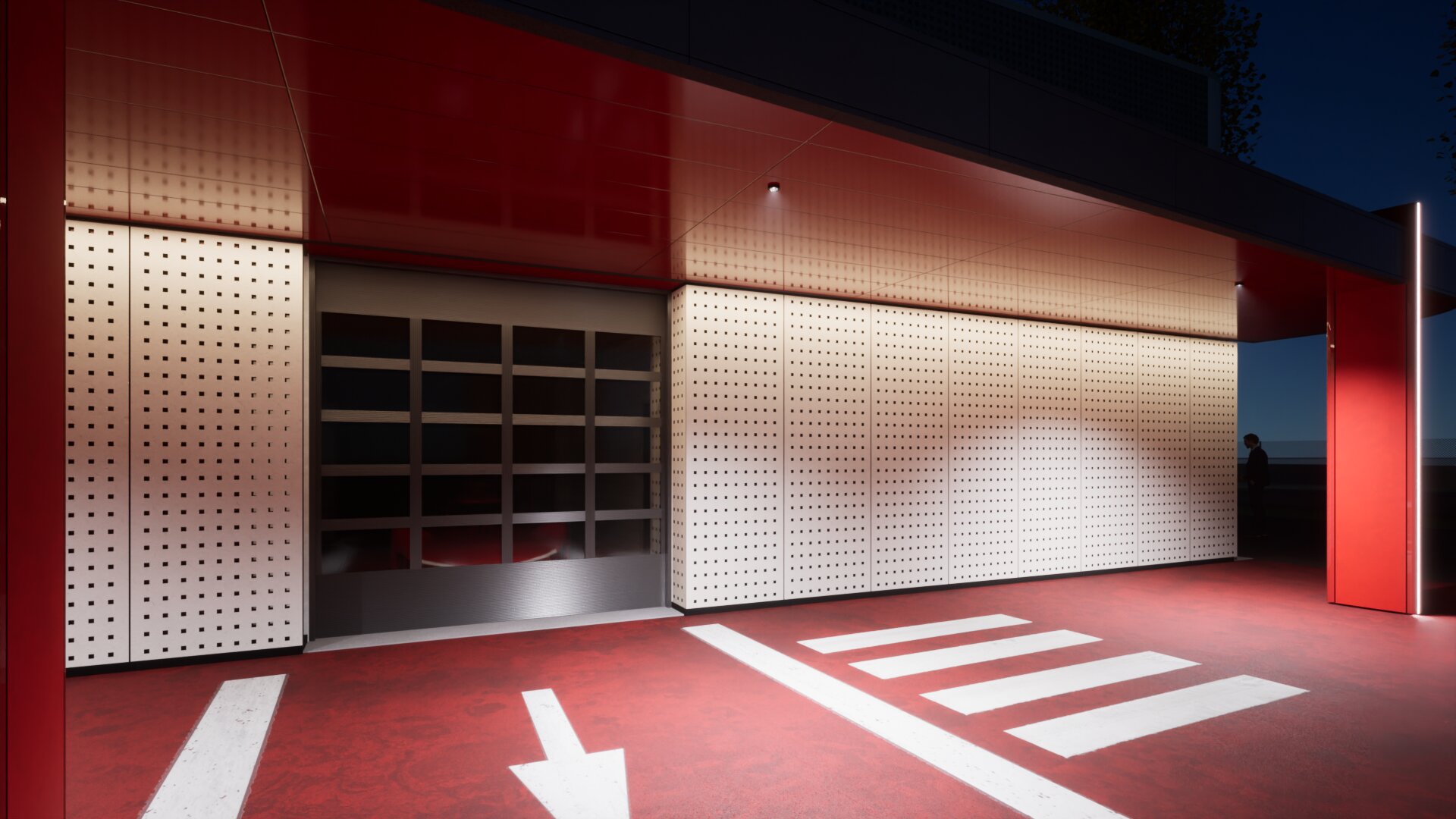
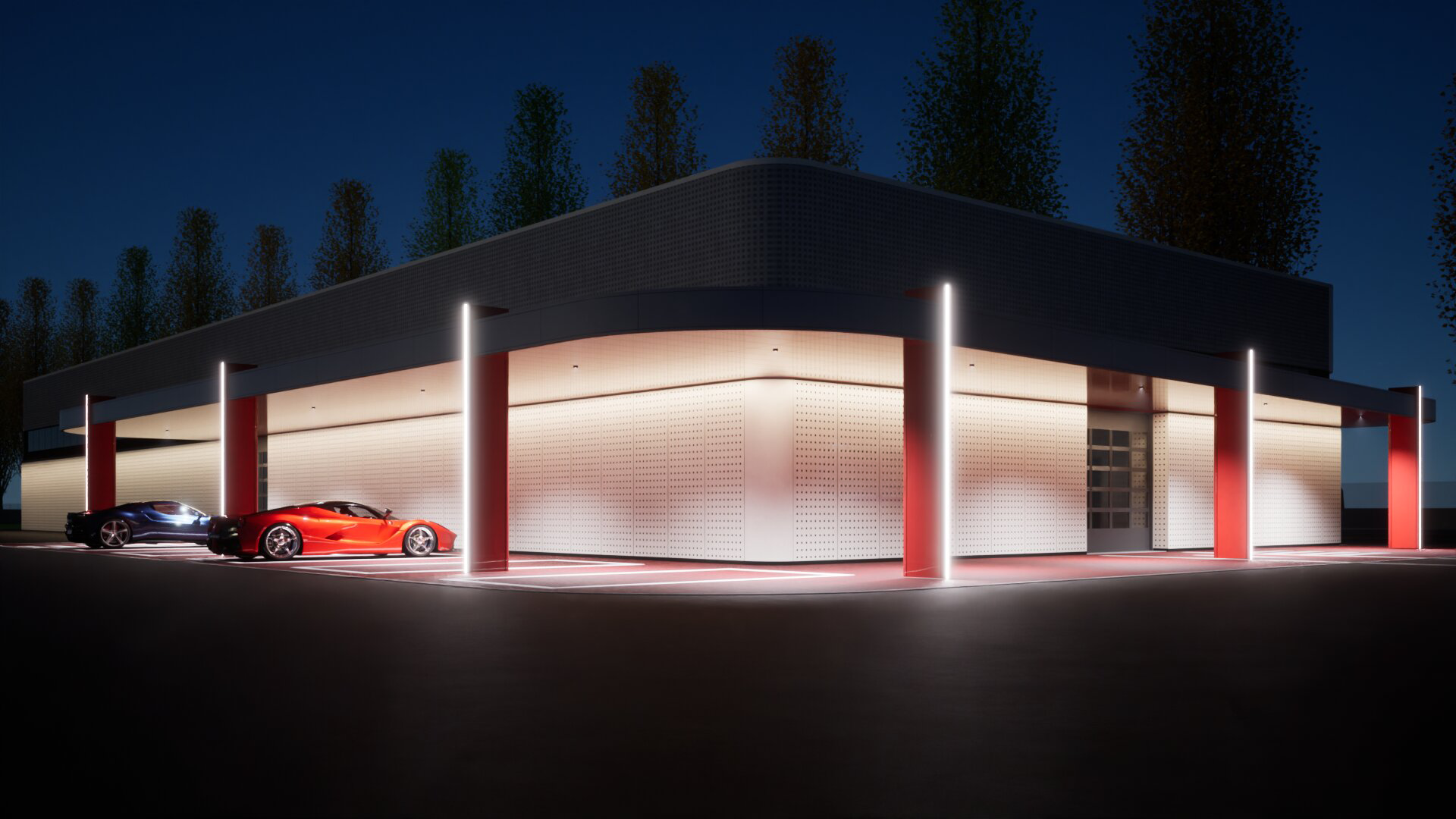
APPROACH
The Ferrari e-Vortex project is the result of an integrated approach that merges architectural design, track engineering, and urban planning. Archilinea and Studio Dromo worked in close synergy with the client, translating complex performance requirements into clear, actionable technical solutions. The method is based on listening to operational needs, simulating real-use conditions, and maintaining rigorous control over every phase, from concept to final delivery.
Next project
Fincibec Group
Fincibec Atelier